
SPIDER’S WEB
“All things are subject to interpretation. Whichever interpretation prevails at a given time is a function of power and not truth.” ( Friedrich Nietzsche)
According to the standard anatomical model, we have understood the human body as being made up of many, separate muscles attached to many, separate bones. We have considered that these muscles and bones alone are responsible for our movement, and that certain muscles move certain bones and make certain movements. This anatomical model is firmly rooted in history; we can trace its origin back to a viewpoint that saw the human body as synonymous with a mechanical object and where dissection aimed to scientifically isolate and define our components thereby reinforcing this view. This interpretation was further compounded by the powerful people and institutions of the times, including universities and publishing houses. Currently, we stand on the precipice leading to a new interpretation of our body. The standard anatomical model is being challenged by the current research on human anatomy and movement and our perception of ourselves will inevitably change as a result of these discoveries.
“There are things known and there are things unknown, and in between are the doors of perception.” (Aldous Huxley)
Historically, human dissection aimed to cut away and remove anything ‘in the way’ of the muscles; however, this approach was removing something of immensely significant importance: fascia.
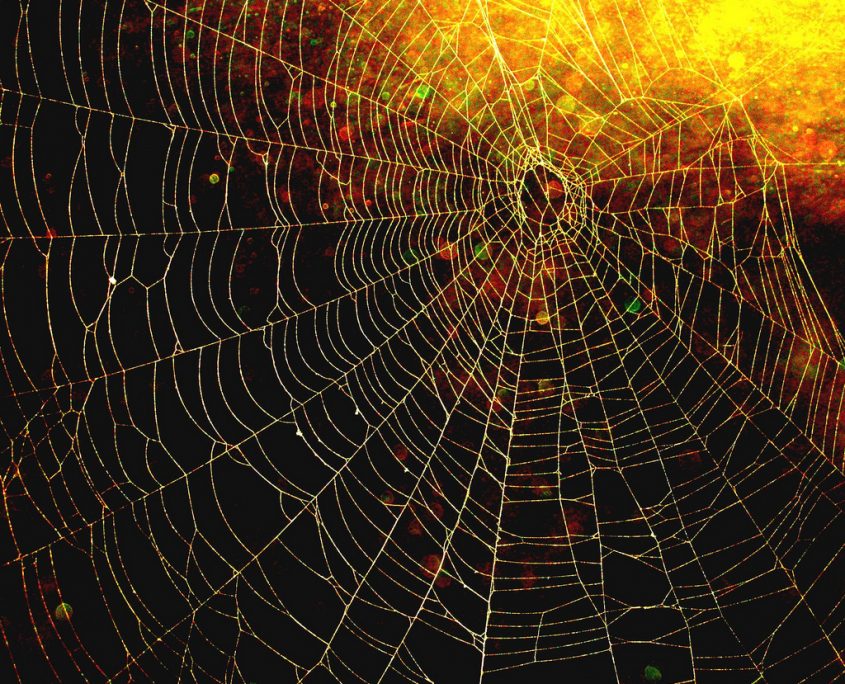
Fascia is a type of connective tissue, which can be imagined as a fabric mesh sheathing our internal body – connecting and interacting with the smallest of cells to the largest of muscles. Fascinatingly, this tissue forms an interconnected web with every part connected to the next, so forming a giant fascial network within our entire body; connecting bones to joints to muscles to organs to skin. In addition, the fascia forms an integral part of our nervous and circulatory systems. Fascia is made up of the fibrous proteins collagen and elastin, cells called fibroblasts that produce these proteins, and plenty of water. Certain parts of the fascia also contain sensory receptors, which can detect pain, temperature, pressure and movement.
With fascia now being given the importance it deserves, our anatomical model of ourselves must change. Instead of seeing our separate components, we can now understand that every part of our anatomy is united by the fascial web. This new perception has implications for how we chose to move our body.
The mesh-like nature of the fascia is variable in its quality depending on the location it is found within the body. In locations that require weight-bearing capabilities, the fascia is thicker and more fibrous; in areas that require movement, the fascia is thinner and more fluid. However, the story does not end there, for the fascia is a responsive medium. If we use a location within our body to bear weight, when this is not its original design, the fascia will respond accordingly and change its properties to become more fibrous. Overtime, this will result in a permanent reduction in movement and fluidity in this location. This has led to the fascia being described as the organ of shape – it communicates our postural patterns.
Moving with fascial understanding means moving as an integrated whole; any movement we make in a seemingly localised area will be connected to every other part of our body via the fascia, there is no such thing as an isolated movement. We must learn to see ourselves as a whole, as this is how we are constructed. Given fascia’s responsive nature, our inherent nature, the importance of applying aligned, balanced forces to our body becomes truly understood.
Image source: Puma Ghostwalker

Leave a Reply
Want to join the discussion?Feel free to contribute!